Peggy Guggenheim's Greatest Masterpiece Wasn't a Painting
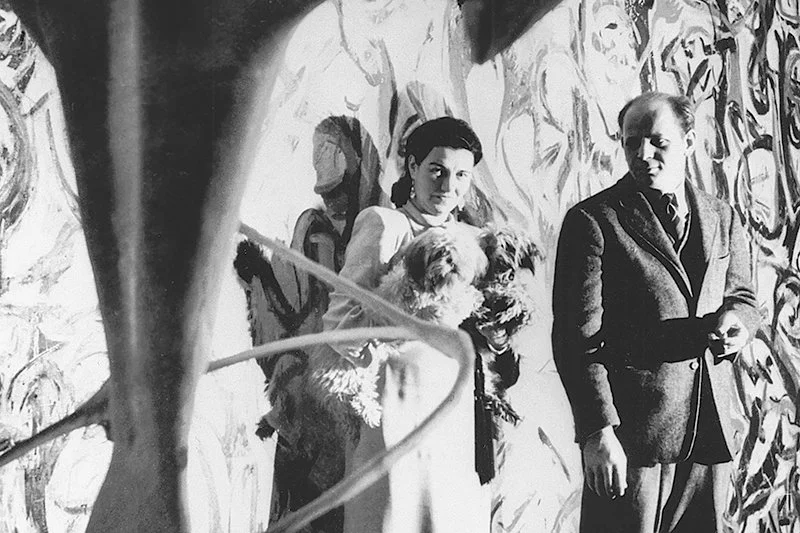
Peggy Guggenheim at home with Jackson Pollock in front of his Mural (1943), New York, ca. 1946 (https://www.guggenheim-venice.it/en/art/in-depth/peggy-guggenheim/about-peggy/)
"Some homes are designed to impress. Others are designed to inspire. Peggy Guggenheim's home did both."
I've visited the Peggy Guggenheim Collection in Venice twice.
And each time, I left thinking less about the paintings and more about the woman who brought them together.
That's saying something.
Within the walls of her home hang works by Picasso, Kandinsky, Miró, Mondrian, Brâncuși, Calder, Pollock, Rothko, and dozens of artists who would ultimately define twentieth-century art. Today, they are household names. When Peggy Guggenheim discovered many of them, they were anything but. She championed artists because she believed in their ideas—not because the market did.
She wasn't simply collecting art.
She was investing in the future.
A Patron Before It Was Popular
Every generation celebrates great artists.
Far fewer celebrate the people who made their work possible.
Peggy Guggenheim changed the trajectory of modern art by doing something surprisingly simple.
She bought the work.
She introduced artists to one another.
She commissioned ambitious projects.
She paid stipends.
She opened doors.
One of the artists who benefited most was Jackson Pollock.
Before Pollock became one of the defining painters of Abstract Expressionism, Peggy gave him his first solo exhibition, placed him under contract so he could paint full time, commissioned his monumental Mural, and introduced his work to Europe. It's difficult to imagine Pollock's career—or the story of American modern art—without Peggy Guggenheim.
Another lifelong favorite of mine is Alexander Calder.
His mobiles seem almost impossible—sculptures that somehow feel lighter than air. Throughout her life, Peggy collected Calder's work, wore his jewelry, and even mixed one Calder earring with another by Yves Tanguy to demonstrate that she refused to choose sides between artistic movements. That playful confidence feels wonderfully Peggy.
Her Home Was the Museum
Perhaps the most remarkable thing about the Peggy Guggenheim Collection is that it doesn't feel like a museum.
It feels like a home.
Because it was.
Palazzo Venier dei Leoni sits quietly along the Grand Canal, remarkably low compared to the neighboring Venetian palaces. Peggy chose to live among the art she loved. Paintings weren't stored in climate-controlled vaults—they were part of everyday life.
That idea resonates deeply with us at Canary House.
We believe homes should tell stories.
Collections shouldn't be hidden away for special occasions.
The best objects earn their place by being lived with every single day.
Walking through Peggy's home feels less like touring a museum and more like being invited into the world's greatest living room.
She Had Style Long Before "Lifestyle"
Peggy herself was unforgettable.
Her oversized sunglasses.
Her sculptural jewelry.
Her bold fashions.
She understood that personal style could be as expressive as collecting art.
She lived exactly the way she collected—with confidence, curiosity, and an eye for the unexpected.
It's impossible not to smile while looking through photographs of her entertaining friends in Venice, surrounded by masterpieces while dressed as though every afternoon deserved a little theater.
The Dogs Were Family
One of the quietest—and most touching—places in the museum isn't a gallery.
It's the garden.
There you'll find the resting place of Peggy's beloved dogs.
She adored them throughout her life, and today they remain buried beside her ashes in the sculpture garden overlooking the canal. It's an unexpectedly personal reminder that behind one of history's greatest art collections was someone who simply loved coming home to her dogs.
As a dog lover myself, it's one of the details I find most relatable.
It reminds me that extraordinary lives are still made up of ordinary moments.
Saving Art... and the Future
One of Peggy Guggenheim's greatest achievements happened before she ever arrived in Venice.
As Europe descended into World War II, she made herself a promise: buy one painting every day.
While others fled, Peggy continued acquiring important works from artists whose futures—and whose art—were suddenly uncertain. Eventually she escaped Nazi-occupied France, bringing much of that collection with her to New York before later returning to Europe. Those decisions helped preserve some of the defining works of modern art for future generations.
She wasn't just collecting.
She was rescuing culture.
Why You Should Visit
If you're planning a trip to Venice, make time for Peggy's house.
Not because it's one of the world's great museums.
Because it reminds us that the greatest collections begin with curiosity.
That supporting creative people matters.
That homes can be places where culture grows.
And that sometimes one person—with conviction, generosity, and remarkable taste—can change the course of art history.
For me, visiting twice has only reinforced one lesson:
The real masterpiece isn't hanging on the walls.
It's the life Peggy Guggenheim created around them.
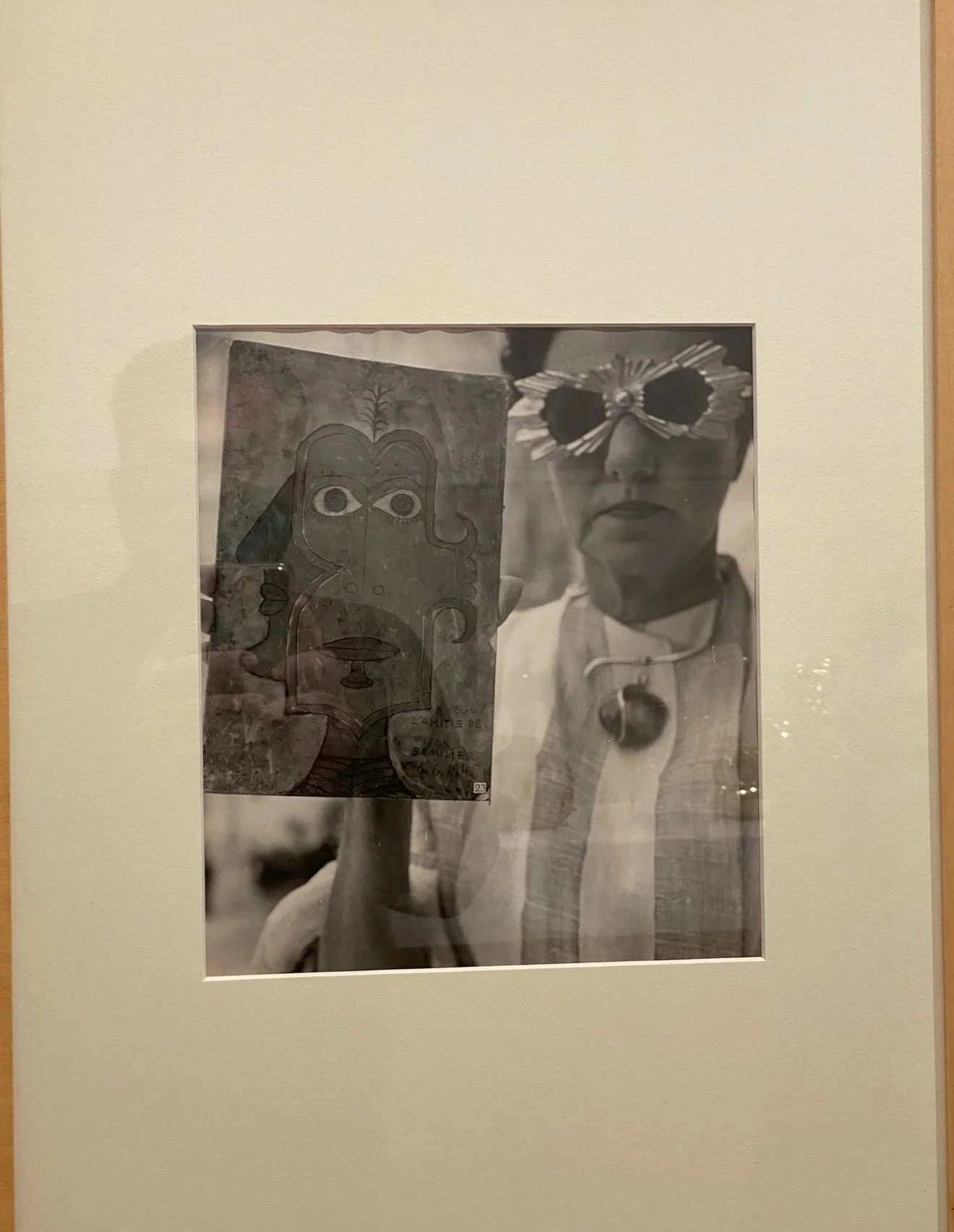
Peggy Guggenheim, forever iconic. Captured through her signature sunglasses, my reflection—masked during the COVID-19 pandemic in 2021—is a small reminder that even in uncertain times, great art still gave us a reason to travel, to learn, and to be inspired.
Planning Your Visit
Peggy Guggenheim Collection
Peggy's former home remains one of Europe's finest museums of modern art, located directly on Venice's Grand Canal.
Learn more and purchase tickets: https://www.guggenheim-venice.it/en/the-museum/
Learn more about Peggy's extraordinary life: https://www.guggenheim-venice.it/en/art/in-depth/peggy-guggenheim/about-peggy/
Don't Miss
Jackson Pollock's early masterpieces, supported by Peggy before the world knew his name.
Alexander Calder's sculptures in the collection and sculpture garden.
The Nasher Sculpture Garden overlooking the Grand Canal.
Peggy's private garden, where she and her beloved dogs are buried together.
At Canary House Tip: Visit early in the morning or during the last hour before closing. The crowds thin out, the galleries become quieter, and the house begins to feel like what it once was—a remarkable home filled with remarkable ideas.