From Tokyo to Palm Springs: Why We're Exploring a Partnership with INAX
At Canary House, we believe every remarkable home begins with remarkable materials.
As we continue the restoration of Laswell, our 1947 Palm Springs home, we're constantly searching for materials that do more than look beautiful. We look for products with a story, a legacy of craftsmanship, and a philosophy that aligns with the architecture we're working so carefully to preserve.
That search recently led us to INAX.
At first, it was the materials themselves that caught our attention. Their long-format architectural ceramic tiles have a quiet confidence—rich in texture, subtle in color, and designed to come alive through light and shadow rather than ornament. They felt immediately at home within the restrained language of desert modernism.
Then we discovered the story behind the company.
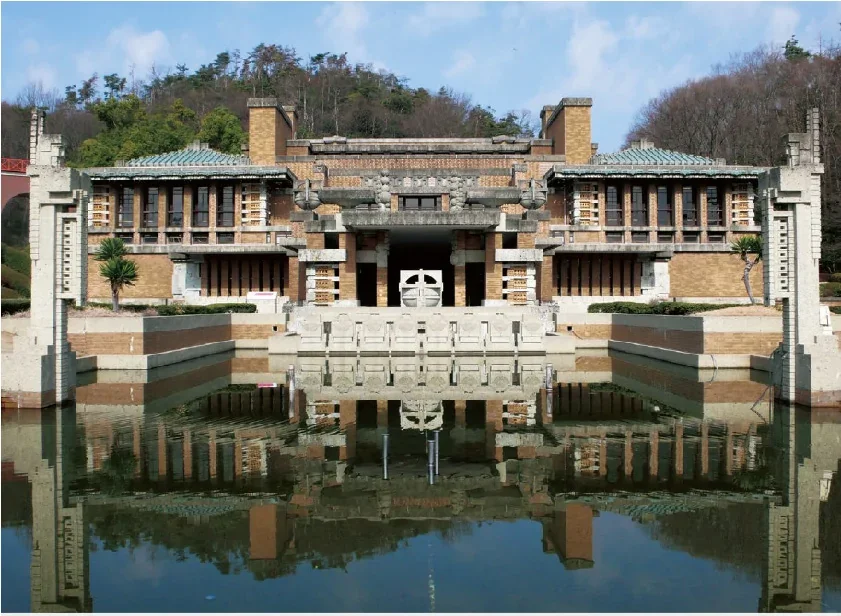
A detailed view of the Imperial Hotel in Tokyo, designed by Frank Lloyd Wright between 1915 and 1923, highlighting its distinctive scratch-face brick and sculptural architectural terracotta. Developed through the collaboration of Wright and Japanese ceramic pioneers Hatsunojo Ina and Chozaburo Ina, these innovative materials laid the foundation for what would become INAX, one of Japan's leading architectural ceramic manufacturers. This enduring legacy of craftsmanship and material innovation continues to inspire the restoration of Laswell, a 1947 Palm Springs desert modern home.
More than a century ago, Frank Lloyd Wright set out to design what would become one of the most celebrated buildings of the twentieth century: the Imperial Hotel in Tokyo. His vision depended on extraordinary ceramic craftsmanship, requiring specially developed scratch-face brick and architectural terracotta unlike anything produced before.
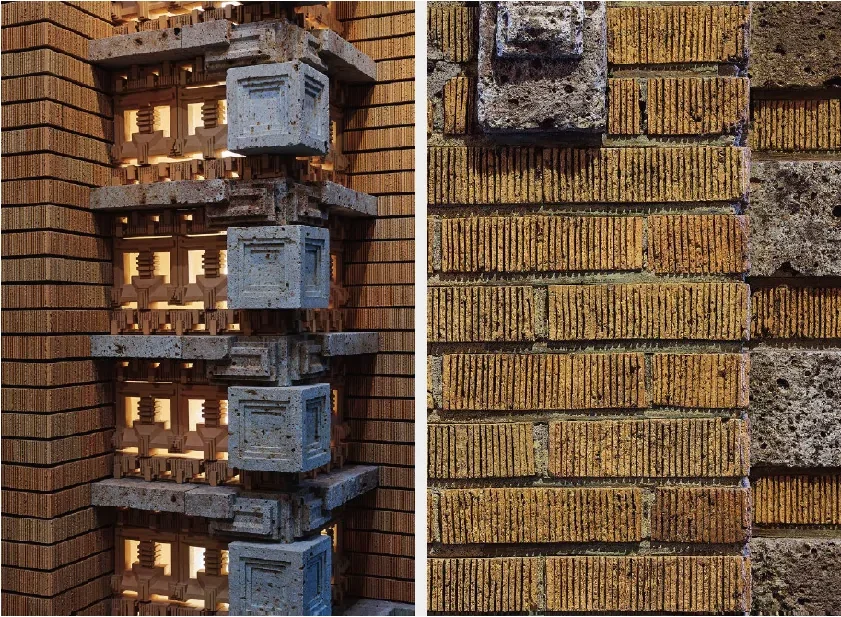
Close-up of Frank Lloyd Wright's Imperial Hotel in Tokyo showing its iconic scratch-face brick and architectural terracotta, crafted with Japanese ceramic innovation that inspired the legacy of INAX.
To bring that vision to life, Wright worked alongside Japanese ceramic pioneers Hatsunojo Ina and Chozaburo Ina, whose expertise helped develop the materials that defined the building. Their work and innovation would eventually become part of the foundation of what is known today as INAX.
It's a remarkable reminder that architecture is often remembered through the materials that make it possible.
That philosophy resonates deeply with us.
Originally completed in 1947, Laswell was built during an era when Palm Springs architects embraced simplicity, honest materials, craftsmanship, and an effortless connection between indoors and outdoors. Nearly eighty years later, those same principles continue to guide every decision we make throughout the restoration.
Rather than recreating the past, our goal is to continue its evolution with materials that feel authentic to the spirit of the home while meeting the expectations of modern living.
One area we're particularly excited to explore is the use of INAX's architectural ceramic facade tile as an accent material on the exterior chimney. Its long, horizontal proportions, subtle texture, and beautiful interaction with sunlight feel perfectly suited to Laswell's clean architectural lines. Alongside cream stucco, warm walnut, and Brazilian Gold flagstone, it has the potential to become one of those quiet details that visitors may not immediately notice—but will never forget.
Today, we're beginning conversations with the INAX team about the possibility of working together.
Whether or not a formal partnership ultimately comes to fruition, we're inspired by the opportunity to learn from a company whose history is intertwined with one of architecture's greatest collaborations.
From the Imperial Hotel in Tokyo to a desert modern home in Palm Springs, the distance may span continents and generations, but the ideas remain remarkably similar.
Great architecture begins with thoughtful design.
Great design deserves extraordinary materials.
And the best materials always tell a story.
—
At Canary House celebrates homes, travel, design, and the people and craftsmanship behind beautiful ways of living. As Laswell continues its restoration, we'll be sharing the discoveries, partnerships, and materials that are helping write its next chapter.